
Among all of Neville Goddard's teachings, few ideas have generated more discussion than the phrase "Everyone Is You Pushed Out." Many students encounter the phrase and immediately interpret it through the lens of relationships. Others interpret it as a teaching about controlling people. Still others reject it entirely because they believe it denies the reality of other individuals.
The problem is not the phrase itself. The problem is that it is often separated from the larger framework of Neville's teachings.
Neville did not build his philosophy around relationships. He built it around consciousness. Every lecture eventually returns to the same central principle: consciousness is the only reality.
When EIYPO is removed from that foundation, it becomes distorted. When it is understood through consciousness, assumptions, self-concept, and states of consciousness, it becomes one of Neville's most profound teachings.
This article is written for students who are already familiar with Neville Goddard and want a deeper understanding of what he was actually communicating.
What Neville Actually Meant
Neville was not teaching that other people are puppets. He was not encouraging students to obsess over changing specific people. He was not presenting a philosophy of control.
Rather, he was drawing attention to the relationship between consciousness and experience.
The assumptions we entertain about ourselves, other people, and life influence how experience unfolds. We perceive, interpret, and react through the state we occupy. Over time, these assumptions become so familiar that they appear to be objective reality.
EIYPO points us back to the creative power of consciousness. It invites us to examine the assumptions we hold instead of focusing exclusively on external conditions.
Consciousness Is the Only Reality
Neville repeatedly stated that consciousness is the only reality. This principle is the foundation upon which every other teaching rests.
Most people assume circumstances create thoughts and feelings. Neville reversed the process. He taught that consciousness precedes experience.
This means that the inner world is not merely reacting to the outer world. The inner world participates in shaping the outer experience.
When consciousness changes, perception changes. When perception changes, behavior changes. When behavior changes, experience changes.
This principle is essential to understanding EIYPO. The people we encounter often reveal the assumptions we hold. They become mirrors that expose states operating within consciousness.
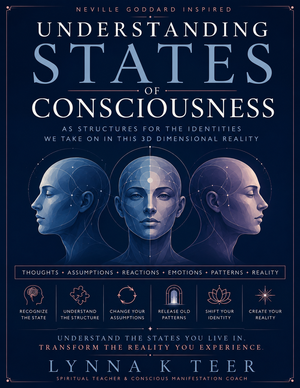
States of Consciousness and EIYPO
A state of consciousness is an organized pattern of identity. It includes assumptions, expectations, emotions, reactions, and beliefs.
Every state possesses its own perspective.
A person occupying a state of confidence sees opportunities where another person sees obstacles. A person occupying a state of being loved experiences relationships differently than someone occupying a state of rejection.
States act as filters. They influence what we notice, how we interpret events, and what feels possible.
When students begin studying EIYPO without understanding states, they often become fixated on changing other people. Once states are understood, attention naturally shifts inward.
The question is no longer: How do I change this person? The question becomes: What state am I occupying that allows me to experience this version of the relationship?
Self-Concept and Relationships
Self-concept is one of the most practical applications of EIYPO.
If you believe you are respected, your interactions will often reflect that assumption. If you believe you are unworthy, ignored, or rejected, those assumptions influence the experience you have with others.
Many recurring relationship patterns are actually reflections of self-concept.
A person who assumes they are not chosen may repeatedly encounter situations that appear to confirm that belief. A person who assumes they are valuable and appreciated may encounter a very different experience.
This does not occur because they are forcing others to behave in a particular way. It occurs because consciousness influences perception, expectation, behavior, and interaction. Over time, experience begins reflecting the state that feels most natural.
Biblical Foundations
One of the unique aspects of Neville's work is his interpretation of scripture. He did not view the Bible primarily as history. He viewed it as a psychological drama unfolding within the individual.
Many biblical passages align closely with EIYPO.
"Judge not, that ye be not judged." This passage points toward the relationship between judgment and experience. The assumptions we hold often return as reflections within our world.
"Do unto others as you would have them do unto you." This principle becomes especially meaningful when viewed through consciousness. The way we view others influences the experience we have of them.
"As a man thinketh in his heart, so is he." Again, the focus is inward. Scripture repeatedly directs attention toward consciousness rather than circumstances.
For Neville, these passages were not moral instructions alone. They were descriptions of psychological law.
Romantic Relationships
Romantic relationships are where many students first encounter EIYPO.
Someone who expects abandonment frequently notices evidence of abandonment. Someone who expects commitment behaves differently, interprets events differently, and often experiences relationships differently.
Many students become focused on specific person manifestations. While this can be an entry point into Neville's teachings, it is not the deepest application.
The deeper work involves examining self-concept. Am I operating from a state of being chosen or rejected? Am I identifying as loved or abandoned? Am I expecting harmony or conflict? These questions reveal the state behind the experience. As state changes, relationship experiences often change as well.
Family and Professional Dynamics
Family relationships frequently reveal assumptions that have been carried for decades. An individual may continue identifying as the overlooked child, the peacemaker, the responsible one, or the misunderstood one. These identities become familiar states.
Professional environments reveal similar patterns. Two employees can work in the same organization and experience entirely different realities. One assumes opportunities exist. Another assumes advancement is impossible. One expects support. Another expects criticism. The assumptions differ. The experience differs.
EIYPO helps reveal these patterns and directs attention toward the state producing them.
Common Misunderstandings and Free Will
Perhaps the most common criticism of EIYPO concerns free will. Many assume that if experience reflects consciousness, then other people must lack autonomy.
Neville did not spend much time debating philosophy. He focused on practical application. The value of EIYPO does not depend upon winning an argument about free will.
The value lies in recognizing that assumptions influence experience. When we become aware of assumptions, we gain the opportunity to change them.
Why Manifestation Seems Inconsistent
Many students eventually ask why manifestation sometimes appears inconsistent. One reason is that desire and state are often in conflict.
A person desires abundance while occupying a state of lack. A person desires love while occupying a state of rejection. A person desires success while occupying a state of inadequacy. The desire points in one direction. The state points in another.
This is why understanding states is so important. Without understanding states, manifestation appears random. With understanding comes clarity.
Practical Exercise
For the next seven days, observe your assumptions. Notice what you expect from people. Notice the stories you tell yourself about relationships. Notice recurring emotional reactions. Write these observations down. Do not judge them. Simply become aware.
Awareness reveals the state. Once the state is visible, transformation becomes possible.
Final Thoughts
Everyone Is You Pushed Out is ultimately not a teaching about changing other people. It is a teaching about consciousness.
The people we encounter often reveal our assumptions. The relationships we experience often reveal our self-concept. The patterns we observe often reveal the state we occupy.
When viewed through the lens of states of consciousness, EIYPO becomes less mysterious and far more practical. It invites us to move beyond blame and toward awareness. It invites us to stop focusing exclusively on circumstances and begin examining consciousness.
Most importantly, it points us toward one of Neville Goddard's central insights: change self, and the world you experience begins to change as well.